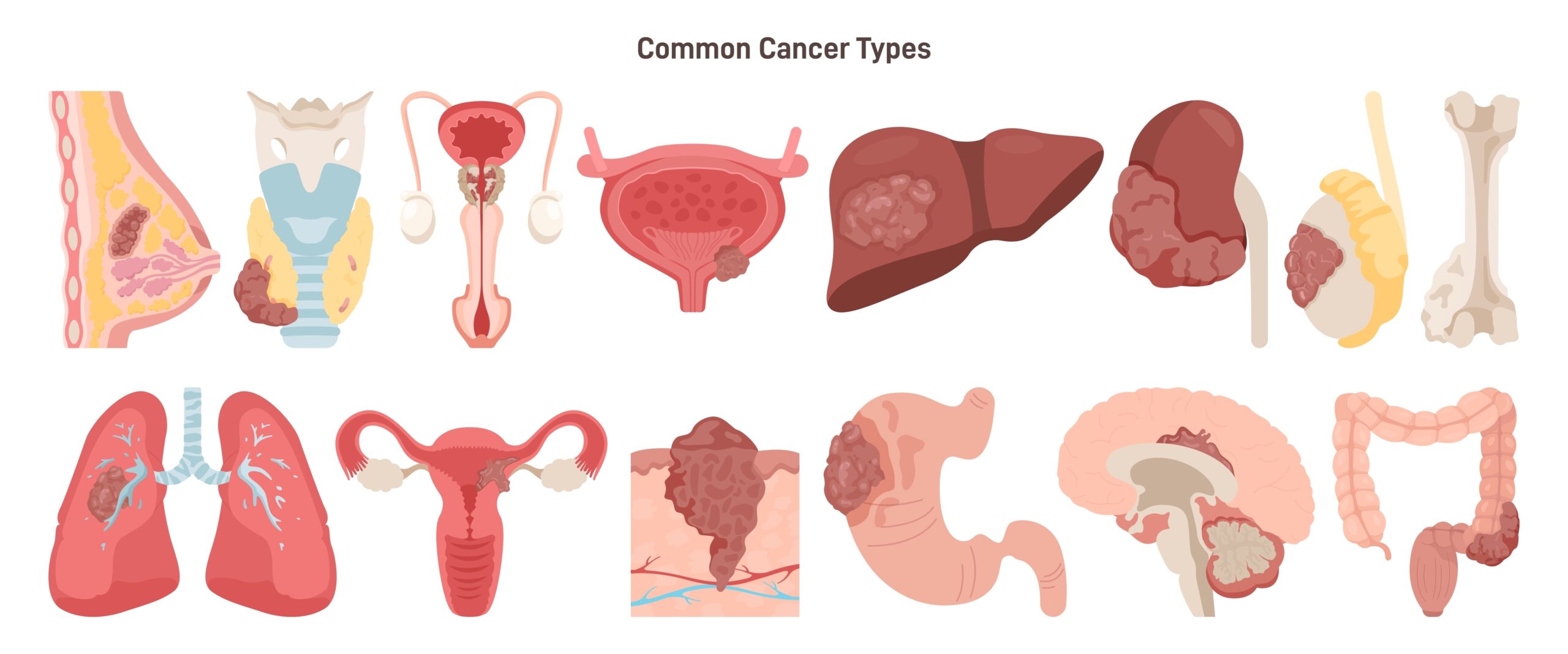
- Why Cancer Is Classified Into Different Types
- Main Categories Used Across Cancer Types
- Understanding Alphabetical Cancer Lists
- Cancer Types A—C (Overview)
- Why Some Cancer Names Sound Similar
- What Cancer Type Names Do Not Tell You
- Why Awareness Without Assumptions Matters
- How This A—Z Resource Is Intended to Be Used
- Cancer Types D—F (Overview)
- Why Some Letters Have Fewer Cancer Types
- Cancer Types G—I (Overview)
- Understanding Grouped Cancer Names
- Cancer Types J—L (Overview)
- Why Some Cancers Appear Under Multiple Names
- What These Lists Help–and What They Don't
- How People Commonly Use A—Z Cancer Resources
- Cancer Types M—O (Overview)
- Why Some Cancer Names Reference Cell Function
- Cancer Types P—R (Overview)
- Understanding Overlapping Cancer Terms
- Cancer Types S—U (Overview)
- Cancer Types V—Z (Overview)
- What an A—Z Cancer List Is Not
- How This Category Supports Cancer Awareness
- Encouraging Informed Conversations
- Trusted Sources for Cancer Education
Cancer is not just one disease. It is a broad word used to describe many different conditions that share some features but are very different in how they grow, where they start, and how they affect the body. An A—Z list of cancer types helps people understand how many kinds of cancer there are while knowing that each type is different. This article gives a simple, easy-to-understand overview of cancer types in alphabetical order. It is made to help people learn and understand without giving diagnoses, predicting results, or offering medical advice.
Why Cancer Is Classified Into Different Types
Cancer types are grouped by where they start in the body and the kind of cells involved. These differences help doctors and researchers talk clearly and plan research, teaching, and care. Public health groups explain that cancer groups show biological differences, not how serious the cancer is (https://www.cancer.gov/about-cancer/understanding/what-is-cancer). Knowing the types helps people see that cancer is not the same for everyone.
Main Categories Used Across Cancer Types
Even though there are many cancer names, most fall into a few big groups.
- Carcinomas — cancers that start in epithelial cells, like those lining organs
- Sarcomas — cancers that start in bone, muscle, or connective tissue
- Leukemias — cancers of blood-forming tissues
- Lymphomas — cancers of the lymphatic system
- Myelomas — cancers of plasma cells
- Central nervous system cancers — cancers of the brain or spinal cord
The National Cancer Institute uses these groups to organize cancer education (https://www.cancer.gov/types).
Understanding Alphabetical Cancer Lists
An A—Z list does not show how common, serious, or treatable a cancer is. It is only a way to organize information. Alphabetical lists help by:
- Making information easier to find
- Reducing confusion about names
- Giving a neutral way to learn
They are used a lot by public health and education groups.
Cancer Types A—C (Overview)
Here are some cancer types usually listed first in alphabetical lists. Descriptions are simple.
- Adrenal cancer — starts in the adrenal glands
- Anal cancer — grows in the anal canal
- Appendiceal cancer — begins in the appendix
- Bladder cancer — starts in the bladder lining
- Bone cancer — begins in bone tissue
- Brain cancer — forms in brain tissue
- Breast cancer — grows in breast tissue
- Cervical cancer — starts in the cervix
- Colon cancer — begins in the large intestine
The National Institutes of Health says each type has special features and subtypes (https://www.nih.gov/health-information).
Why Some Cancer Names Sound Similar
Many cancer names come from body parts, so they can sound alike. For example, colon and colorectal cancer are related but not the same. Health groups say names show location and cell type, not symptoms or results (https://www.cancer.gov/about-cancer/diagnosis-staging). That’s why it’s important to explain names carefully when learning.
What Cancer Type Names Do Not Tell You
A cancer’s name alone does not tell you:
- How it acts
- How fast it grows
- What symptoms it may cause
- What the results might be
Public health advice always says not to guess based on names alone (https://www.who.int/news-room/fact-sheets/detail/cancer).
Why Awareness Without Assumptions Matters
Learning about cancer types is to help people know more, not to diagnose themselves or be scared. Good education focuses on understanding the structure, not guessing personal results.
How This A—Z Resource Is Intended to Be Used
This section is made to:
- Give neutral, educational summaries
- Help basic understanding of terms
- Encourage informed talks
It is not meant to replace advice from doctors. This section keeps going through cancer types from D to L. Like all parts, descriptions are simple and educational, without medical advice or guesses about results.
Cancer Types D—F (Overview)
Many cancer names here are closely linked to certain organs or systems.
- Esophageal cancer — starts in the esophagus, the tube from throat to stomach
- Eye cancer — cancers that start in parts of the eye
- Gallbladder cancer — begins in the gallbladder, a small organ under the liver
- Gastric (stomach) cancer — grows in the stomach lining
- Head and neck cancers — a group of cancers affecting mouth, throat, and nearby areas
The National Cancer Institute says grouping by body area helps with education and research (https://www.cancer.gov/types).
Why Some Letters Have Fewer Cancer Types
Alphabet lists are uneven. Some letters have many cancer names, others have few. This is because:
- Medical terms follow body parts, not the alphabet
- Some organs have many name versions
- Old naming habits still exist
Public health groups use alphabetical lists to make info easy to find, not to be complete by letter.
Cancer Types G—I (Overview)
This group includes cancers linked to glands, hormones, and immune tissues.
- Germ cell tumors — come from reproductive cells and can be in different places
- Hodgkin lymphoma — a cancer of the lymph system
- Kidney (renal) cancer — starts in kidney tissue
- Laryngeal cancer — begins in the larynx (voice box)
- Leukemia — a group of blood cancers affecting bone marrow
The National Institutes of Health says many of these have several subtypes (https://www.nih.gov/health-information).
Understanding Grouped Cancer Names
Some names in A—Z lists cover groups of diseases, not just one. Leukemia and lymphoma, for example, have many forms. Grouping shows:
- Common cell origins
- Similar biological behavior
- Related research ways
The World Health Organization says grouped names help with better classification and global agreement (https://www.who.int/news-room/fact-sheets/detail/cancer).
Cancer Types J—L (Overview)
There are fewer cancers starting with these letters, but they are still important in full lists.
- Kaposi sarcoma — cancer in the lining of blood and lymph vessels
- Liver cancer — starts in liver cells
- Lung cancer — begins in lung tissue
- Lymphoma (non-Hodgkin) — a big group of lymphatic cancers
These cancers are talked about by both organ and system groups.
Why Some Cancers Appear Under Multiple Names
One cancer can have different names depending on context. For example, liver cancer may also be called hepatic cancer. This happens because of:
- Medical words from Latin
- Differences between common and medical language
- Old naming habits
Health education tries to explain these overlaps for better public understanding (https://www.cancer.gov/about-cancer/diagnosis-staging).
What These Lists Help–and What They Don’t
An A—Z list helps people see how many types of cancer there are, but it does not explain how a cancer acts. These lists are not made to:
- Show how serious a cancer is
- Predict chances
- Replace doctor evaluation
Public health groups always warn not to use lists as diagnostic tools.

How People Commonly Use A—Z Cancer Resources
People use alphabetical lists when they:
- See cancer names they don’t know
- Want general information
- Get ready to ask doctors questions
This helps people have informed talks, not make conclusions. This last section finishes the alphabetical overview of cancer types, covering from M to Z. Like before, the goal is to give clear, neutral education that helps understanding without causing assumptions, diagnosis, or fear.
Cancer Types M—O (Overview)
This part includes cancers linked to skin, glands, and hormone-related organs.
- Melanoma — cancer that starts in skin cells that make pigment
- Mesothelioma — cancer in the lining of the lungs or abdomen
- Multiple myeloma — cancer of plasma cells in bone marrow
- Nasal cavity and sinus cancer — starts in the nose passages or sinus spaces
- Neuroendocrine tumors — cancers from hormone-producing cells
- Oral cancer — affects mouth, lips, or tongue
- Ovarian cancer — grows in the ovaries
The National Cancer Institute says cancers in this group vary a lot in behavior and types (https://www.cancer.gov/types).
Why Some Cancer Names Reference Cell Function
Some cancers are named after the type of cell they come from, not the organ. Neuroendocrine tumors are one example. This naming shows:
- Cell function, not location
- Shared biological traits
- Needs for research and classification
The World Health Organization says naming by cell type helps with global cancer classification (https://www.who.int/news-room/fact-sheets/detail/cancer).
Cancer Types P—R (Overview)
These cancers are often talked about in public health because they are common and have awareness campaigns.
- Pancreatic cancer — starts in the pancreas
- Prostate cancer — grows in the prostate gland
- Rectal cancer — affects the rectum
- Renal cancer — another name for kidney cancer
Public health groups say awareness is about education, not predicting results (https://www.nih.gov/health-information).
Understanding Overlapping Cancer Terms
Some cancers have more than one name because they can be described by:
- Organ location (like kidney)
- Medical terms (like renal)
- System involvement (like gastrointestinal)
Health education includes cross-references to help reduce confusion.
Cancer Types S—U (Overview)
This group includes cancers of connective tissue, skin, and reproductive organs.
- Sarcoma — cancers of bone and soft tissue
- Skin cancer (non-melanoma) — includes basal and squamous cell cancers
- Small intestine cancer — starts in the small bowel
- Stomach cancer — also called gastric cancer
- Testicular cancer — grows in the testicles
- Thyroid cancer — starts in the thyroid gland
The National Institutes of Health says many of these cancers have several subtypes (https://www.nih.gov/health-information).
Cancer Types V—Z (Overview)
There are fewer cancers in this range, but they are part of complete A—Z lists.
- Vaginal cancer — grows in vaginal tissue
- Vulvar cancer — starts in the outer female genital area
Using alphabetical order makes sure no cancer type is missed, even if it is less common.
What an A—Z Cancer List Is Not
An alphabetical list is not for self-diagnosis, risk checking, or predicting results. Public health groups say cancer education should always be used with advice from healthcare professionals (https://www.cancer.gov/about-cancer).
How This Category Supports Cancer Awareness
The goal of the Cancer Types A—Z category is to:
- Make terms clearer
- Reduce confusion about names
- Help calm, informed learning
Knowing the structure helps people ask better questions–not make guesses.
Encouraging Informed Conversations
Learning cancer type names can help people talk clearly with doctors, caregivers, and teachers. The Centers for Disease Control and Prevention says clear communication helps people understand health better (https://www.cdc.gov/healthliteracy/index.html).
Trusted Sources for Cancer Education
- National Cancer Institute – https://www.cancer.gov
- National Institutes of Health – https://www.nih.gov
- Centers for Disease Control and Prevention – https://www.cdc.gov
- World Health Organization – https://www.who.int
Disclaimer: This content is for general education only and is not medical advice. Always talk to a licensed healthcare professional for advice about your health.