- What Is Secondhand Smoke
- How Secondhand Smoke Causes Cancer
- Types of Cancer Linked to Secondhand Smoke
- Who Is Most at Risk
- Reducing Exposure to Secondhand Smoke
- The Benefits of Smoke-Free Environments
- Common Myths and Misunderstandings
- Myth: Ventilation Systems Eliminate Secondhand Smoke Risks
- Myth: Brief Exposure Is Not Harmful
- Myth: Secondhand Smoke Only Affects the Lungs
- Key Takeaways
- Learn More
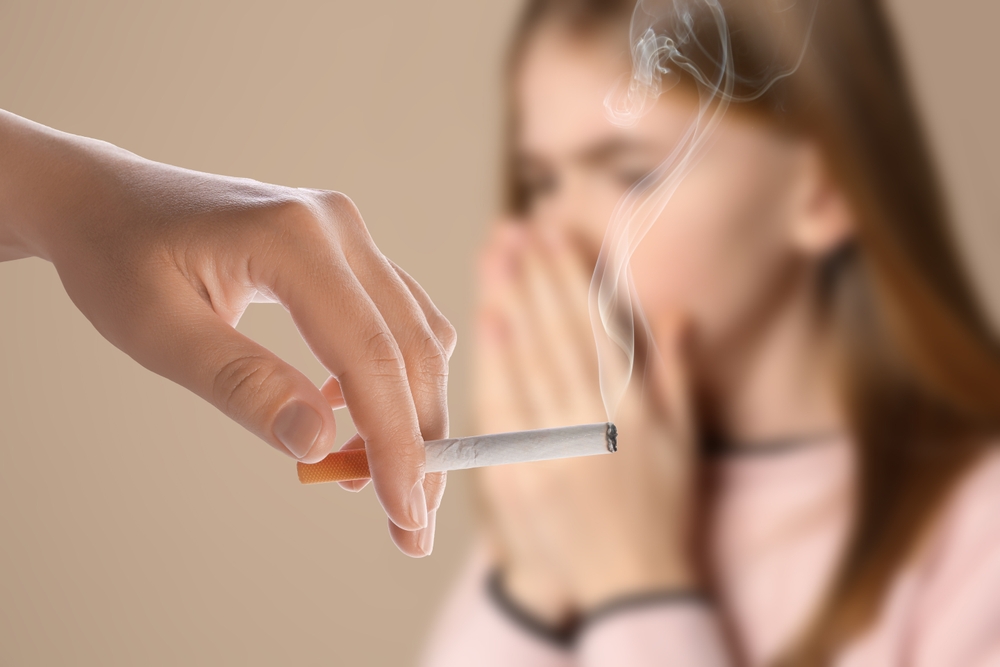
Secondhand smoke is tobacco smoke breathed in by people who are not smoking themselves. This smoke comes from the burning end of cigarettes, cigars, or pipes, and from smoke exhaled by smokers. Research shows that secondhand smoke contains the same harmful chemicals that cause cancer in active smokers.
Millions of nonsmokers are exposed to secondhand smoke in their homes, workplaces, and public spaces. Studies suggest that this exposure significantly increases cancer risk, even for people who have never smoked. Understanding these risks helps families make informed decisions about protecting their health.
What Is Secondhand Smoke
Secondhand smoke has two main parts. Sidestream smoke comes directly from the burning tobacco product. Mainstream smoke is exhaled by the person smoking. Both types contain dangerous chemicals that can cause cancer.
Experts have identified over 7,000 chemicals in secondhand smoke. At least 70 of these chemicals are known to cause cancer in humans. These include formaldehyde, benzene, polonium-210, and many others that damage cells throughout the body.
The smoke lingers in the air long after someone finishes smoking. It can stick to clothing, furniture, carpets, and walls. This residue, sometimes called thirdhand smoke, continues to release harmful chemicals into the environment for weeks or months.
How Secondhand Smoke Causes Cancer
When people breathe secondhand smoke, cancer-causing chemicals enter their lungs and spread throughout their body through the bloodstream. These chemicals can damage DNA in cells, which is how cancer develops over time.
The body tries to repair this damage, but repeated exposure makes it harder for cells to fix themselves properly. Some damaged cells may begin growing and dividing abnormally, potentially leading to cancer. This process can happen in many parts of the body, not just the lungs.
Research from the National Cancer Institute shows that there is no safe level of secondhand smoke exposure. Even brief exposure can cause immediate harm to the cardiovascular system and may contribute to cancer risk over time.
Types of Cancer Linked to Secondhand Smoke
Lung cancer is the most well-established cancer risk from secondhand smoke exposure. Studies consistently show that nonsmokers who live with smokers have a 20 to 30 percent higher risk of developing lung cancer compared to those not exposed to secondhand smoke.
Evidence also suggests links between secondhand smoke and other cancers. Some research indicates possible connections to breast cancer, especially in younger women, and cancers of the nasal cavity and sinuses. The International Agency for Research on Cancer has classified secondhand smoke as a known human carcinogen.
Children exposed to secondhand smoke may face additional risks. Some studies suggest potential links to childhood leukemia and lymphoma, though more research is needed to fully understand these connections. The developing bodies of children may be more vulnerable to the harmful effects of tobacco smoke chemicals.
Who Is Most at Risk
People who live or work with smokers face the highest exposure to secondhand smoke. Family members of smokers, restaurant and bar workers, and casino employees historically had significant exposure before smoking bans became widespread.
Children are particularly vulnerable because they breathe faster than adults and have developing respiratory systems. They also have less control over their environment and cannot choose to leave smoky areas. Pregnant women exposed to secondhand smoke may pass harmful chemicals to their developing babies.
Some populations face higher exposure rates due to social and economic factors. People with lower incomes may be more likely to live in housing where smoking occurs or work in environments with secondhand smoke exposure. Cultural factors may also influence smoking patterns within families and communities.
Reducing Exposure to Secondhand Smoke
Creating smoke-free homes and cars provides the most effective protection for families. This means not allowing anyone to smoke indoors or in vehicles, even when windows are open. Ventilation systems cannot eliminate secondhand smoke exposure completely.
Many workplaces and public places now have smoke-free policies that protect nonsmokers. These laws have significantly reduced exposure for millions of people. When visiting places that allow smoking, choosing smoke-free areas or establishments provides better protection.
Supporting family members or friends who want to quit smoking benefits everyone’s health. Prevention strategies work best when entire households commit to being smoke-free. Many resources are available to help people quit smoking successfully.
The Benefits of Smoke-Free Environments
Research shows that smoke-free policies quickly improve air quality and reduce health risks. Studies in cities and countries that implemented comprehensive smoking bans found immediate decreases in heart attacks and respiratory problems among nonsmokers.
Children living in smoke-free homes have fewer ear infections, asthma attacks, and respiratory infections. They also show better lung function and growth patterns compared to children exposed to secondhand smoke regularly.
The economic benefits of smoke-free policies include reduced healthcare costs and increased productivity. Businesses often find that smoke-free workplaces reduce cleaning costs, improve employee health, and may attract more customers who prefer smoke-free environments.
Common Myths and Misunderstandings
Myth: Ventilation Systems Eliminate Secondhand Smoke Risks
Some people believe that air conditioning, fans, or special ventilation systems can make indoor smoking safe for nonsmokers. The truth is that no ventilation system can completely remove secondhand smoke from indoor air. The only way to fully protect people from secondhand smoke exposure is to maintain completely smoke-free indoor environments.
Myth: Brief Exposure Is Not Harmful
Another common misunderstanding is that short-term or occasional exposure to secondhand smoke is harmless. Research from the Centers for Disease Control and Prevention shows that even brief exposure can cause immediate changes in blood chemistry and cardiovascular function. There is no safe level of secondhand smoke exposure.
Myth: Secondhand Smoke Only Affects the Lungs
Many people think secondhand smoke only increases lung cancer risk. In reality, the chemicals in secondhand smoke travel throughout the body and can affect many organs. Studies have found associations with various types of cancer and other serious health conditions affecting the heart, blood vessels, and other body systems.
Key Takeaways
- Secondhand smoke contains over 70 known cancer-causing chemicals that pose serious health risks to nonsmokers
- Lung cancer risk increases by 20 to 30 percent for nonsmokers regularly exposed to secondhand smoke
- No level of secondhand smoke exposure is considered safe, and ventilation cannot eliminate the risks
- Children and pregnant women face particularly high risks from secondhand smoke exposure
- Smoke-free homes, cars, and workplaces provide the most effective protection for families
- Comprehensive smoking bans have proven successful in reducing exposure and improving public health
Learn More
- National Cancer Institute Secondhand Smoke Fact Sheet – comprehensive overview of health risks and scientific evidence
- CDC Secondhand Smoke Facts – detailed information about exposure risks and health effects
- World Health Organization Tobacco Fact Sheet – global perspective on tobacco and secondhand smoke health impacts
- US Preventive Services Task Force Tobacco Cessation Recommendations – evidence-based guidance for smoking cessation
- CDC Resources for Quitting Smoking – tools and support for people who want to quit smoking
- National Cancer Institute Tobacco and Cancer – comprehensive information about tobacco-related cancer risks
- CDC Secondhand Smoke Information – educational resources about protecting families from secondhand smoke
Disclaimer: This information is for educational purposes only and is not medical advice. Talk to a healthcare provider about questions related to your health.