
- What Does Cancer Diagnosis Mean?
- Why Cancer Diagnosis Often Involves Multiple Steps
- Medical History and Symptom Review
- Physical Examination
- Laboratory Tests and Cancer Diagnosis
- Why No Single Test Can Diagnose All Cancers
- Imaging Tests Used in Cancer Diagnosis
- X-Rays
- Computed Tomography (CT) Scans
- Magnetic Resonance Imaging (MRI)
- Positron Emission Tomography (PET) Scans
- Ultrasound
- What Imaging Tests Can and Cannot Show
- Biopsies and Tissue Evaluation
- Common Types of Biopsies
- What Happens to Biopsy Samples
- Understanding Pathology Reports
- Why Biopsy Results Can Take Time
- Biopsies and Non-Cancer Findings
- The Role of Biopsy in the Diagnostic Process
- Molecular and Genetic Testing in Cancer Diagnosis
- Staging and Grading: How Diagnosis Is Further Described
- Why Diagnosis Can Involve Uncertainty
- The Role of Second Opinions
- How Diagnostic Information Is Used
- Summary
Cancer diagnosis is a process used to determine whether cancer is present and to describe its basic characteristics. This process may involve multiple steps and different types of evaluations. Understanding how cancer is diagnosed can help individuals and families better interpret information they may encounter during appointments, research, or public health discussions.
According to the National Cancer Institute (NCI), there is no single test that can diagnose all cancers. Instead, diagnosis typically involves a combination of medical history, physical examinations, laboratory tests, imaging studies, and sometimes tissue evaluation.
This pillar article explains cancer diagnosis in simple, non-technical language. The purpose is education and awareness–not diagnosis, treatment recommendations, or medical advice.
What Does Cancer Diagnosis Mean?
Cancer diagnosis refers to identifying the presence of cancer and determining where it started in the body. Diagnosis focuses on confirming whether abnormal cells are cancerous and gathering information about their basic features.
The World Health Organization (WHO) explains that cancer diagnosis is a critical step in understanding cancer at both the individual and population levels.
A diagnosis may help answer questions such as:
- Is cancer present?
- Where did it begin?
- How extensive is it?
Diagnosis does not determine outcomes or experiences. It provides descriptive information that supports further evaluation and discussion.
Why Cancer Diagnosis Often Involves Multiple Steps
Cancer diagnosis is rarely based on a single finding. Many conditions can cause symptoms or test results that resemble cancer, which is why additional evaluation is often needed.
The American Cancer Society (ACS) notes that combining different diagnostic methods improves accuracy and helps reduce uncertainty.
Multiple steps may be needed to:
- Confirm whether cancer is present
- Distinguish cancer from non-cancerous conditions
- Understand basic characteristics of the cancer
This step-by-step approach helps ensure that conclusions are based on reliable information.
Medical History and Symptom Review
Diagnosis often begins with a review of medical history and current symptoms. This step helps provide context for further evaluation.
According to the NCI, healthcare professionals may ask about:
- Changes in health or symptoms
- Personal medical history
- Family health history
- Lifestyle or environmental factors
Many symptoms associated with cancer can also be caused by non-cancerous conditions. For this reason, symptom review alone cannot confirm a cancer diagnosis.
Physical Examination
A physical examination may be used to check for physical signs that could suggest cancer, such as lumps, changes in skin appearance, or organ enlargement.
The UK National Health Service (NHS) explains that physical exams help guide decisions about which tests may be appropriate next.
Physical findings are considered alongside other information and are not used alone to make a diagnosis.
Laboratory Tests and Cancer Diagnosis
Laboratory tests analyze samples such as blood, urine, or other body fluids. These tests can provide information about how organs are functioning or whether certain substances are present at unusual levels.
According to the National Cancer Institute, laboratory tests may sometimes suggest the possibility of cancer, but they cannot usually confirm a diagnosis on their own.
Examples of laboratory tests include:
- Blood tests
- Urine tests
- Analysis of other body fluids
Abnormal lab results can have many causes, which is why they are interpreted carefully and often followed by additional testing.
Why No Single Test Can Diagnose All Cancers
Cancer includes many different diseases that affect various tissues and organs. Because of this diversity, no single test can identify all cancers.
The Centers for Disease Control and Prevention (CDC) emphasizes that cancer diagnosis relies on combining information from multiple sources.
This approach helps ensure that diagnosis is accurate, thorough, and based on reliable evidence.
Imaging Tests Used in Cancer Diagnosis
Imaging tests play an important role in cancer diagnosis by creating pictures of structures inside the body. These images can help identify areas that look unusual and may require further evaluation.
According to the National Cancer Institute (NCI), imaging tests do not usually confirm cancer on their own, but they help show the location, size, and shape of abnormalities.
Imaging is often used to:
- Detect suspicious areas
- Guide further testing
- Monitor changes over time
Different imaging techniques are used depending on the part of the body being examined.
X-Rays
X-rays are one of the oldest and most commonly used imaging tools. They use small amounts of radiation to produce images of dense structures such as bones and some organs.
The American Cancer Society (ACS) explains that X-rays may sometimes show tumors, blockages, or changes in bone structure.
X-rays are often used as an initial imaging step, but they may not provide enough detail to fully evaluate soft tissues.
Computed Tomography (CT) Scans
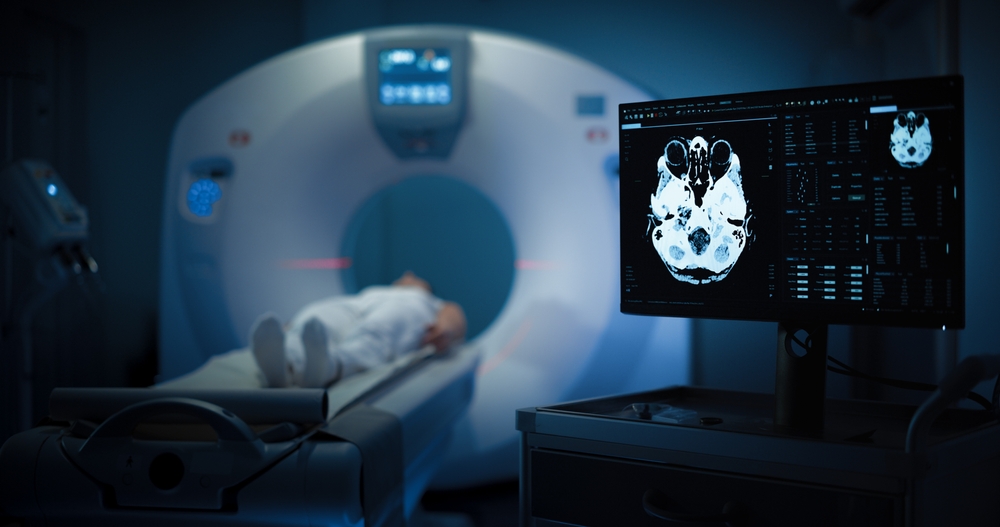
Computed tomography, commonly called a CT scan, uses X-rays and computer processing to create detailed cross-sectional images of the body.
According to the National Cancer Institute, CT scans are widely used to look for tumors, evaluate their size, and determine whether cancer may have spread to nearby areas.
CT scans can help:
- Identify abnormal masses
- Guide biopsy procedures
- Assess involvement of nearby organs
CT imaging provides more detail than standard X-rays but still cannot definitively diagnose cancer.
Magnetic Resonance Imaging (MRI)
Magnetic resonance imaging (MRI) uses strong magnetic fields and radio waves to produce detailed images of soft tissues.
The National Cancer Institute notes that MRI is particularly useful for examining the brain, spinal cord, muscles, and other soft tissues.
MRI scans may be used to:
- Examine tumors in soft tissues
- Assess involvement of nerves or blood vessels
- Clarify findings seen on other imaging tests
MRI does not use ionizing radiation, which distinguishes it from X-rays and CT scans.
Positron Emission Tomography (PET) Scans
Positron emission tomography, or PET, is an imaging technique that helps show how tissues and organs are functioning rather than just how they look.
According to the National Cancer Institute, PET scans can help identify areas of increased metabolic activity, which may be associated with cancer.
PET scans are often combined with CT scans to provide both functional and structural information.
It is important to note that increased activity on a PET scan does not always indicate cancer, as inflammation and infection can also produce similar findings.
Ultrasound
Ultrasound uses sound waves to create images of structures inside the body. It does not involve radiation and is commonly used for evaluating soft tissues and fluid-filled structures.
The American Cancer Society explains that ultrasound may be used to examine organs such as the liver, kidneys, thyroid, and reproductive organs.
Ultrasound can help:
- Differentiate solid masses from fluid-filled cysts
- Guide needle biopsies
- Evaluate changes over time
As with other imaging tests, ultrasound findings must be interpreted alongside other diagnostic information.
What Imaging Tests Can and Cannot Show
Imaging tests provide valuable information, but they have limitations. They can reveal abnormalities but cannot always determine whether a finding is cancerous.
The World Health Organization (WHO) emphasizes that imaging results are part of a broader diagnostic process.
Because many non-cancerous conditions can appear abnormal on imaging, additional testing is often required to confirm a diagnosis.
Biopsies and Tissue Evaluation
In many cases, a biopsy is needed to confirm whether cancer is present. A biopsy involves removing a small sample of tissue or cells so it can be examined more closely.
According to the National Cancer Institute (NCI), a biopsy is often the only way to make a definitive cancer diagnosis.
Biopsies help answer important questions, including:
- Are the cells cancerous?
- What type of cancer is present?
- How abnormal do the cells appear?
Not all abnormal findings require a biopsy, but when imaging or lab tests raise concern, tissue evaluation provides clarity.
Common Types of Biopsies
There are several types of biopsies, and the method used depends on the location of the abnormal area and the type of tissue involved.
The American Cancer Society (ACS) describes common biopsy methods, including:
- Needle biopsy: Uses a thin needle to remove cells or tissue
- Core biopsy: Removes a small cylinder of tissue
- Surgical biopsy: Removes part or all of a suspicious area
- Endoscopic biopsy: Uses a scope to collect tissue from inside the body
Each method is selected to balance accuracy with safety and comfort.
What Happens to Biopsy Samples
After a biopsy sample is collected, it is sent to a laboratory for analysis. Specialists called pathologists examine the tissue under a microscope.
According to the National Cancer Institute, pathology evaluation helps determine whether cancer is present and provides details about the cancer’s characteristics.
Pathology analysis may include:
- Microscopic examination of cell structure
- Identification of cancer type
- Assessment of how abnormal the cells appear
These findings form the foundation of a cancer diagnosis.
Understanding Pathology Reports
A pathology report summarizes the findings from tissue evaluation. While these reports are written for medical professionals, they contain standardized information.
The American Cancer Society explains that pathology reports may include:
- Description of the tissue sample
- Diagnosis or findings
- Information about cell appearance
Pathology reports do not provide treatment recommendations. They describe what was found in the tissue.
Why Biopsy Results Can Take Time
Receiving biopsy results can take several days or longer. This waiting period can feel stressful, but careful analysis is important.
According to the UK National Health Service (NHS), additional tests may be needed to ensure accuracy, especially when results are unclear.
Time is often needed for:
- Special staining techniques
- Additional laboratory analysis
- Review by specialized pathologists
Thorough evaluation helps reduce uncertainty and errors.
Biopsies and Non-Cancer Findings
Not all biopsies show cancer. Many biopsies reveal non-cancerous conditions such as inflammation, infection, or benign growths.
The National Cancer Institute emphasizes that biopsies are used to clarify findings, not to assume a cancer diagnosis.
This reinforces why biopsy results must be interpreted carefully and in context.
The Role of Biopsy in the Diagnostic Process
Biopsy results are considered alongside imaging, laboratory tests, and clinical information. Diagnosis is based on the full picture rather than a single test.
The World Health Organization (WHO) highlights that accurate diagnosis depends on combining multiple sources of information.
This comprehensive approach helps ensure that cancer diagnoses are as accurate and informative as possible.
Molecular and Genetic Testing in Cancer Diagnosis
In addition to imaging and biopsies, some cancer diagnoses include molecular or genetic testing. These tests look at genes, proteins, or other markers within cancer cells.
According to the National Cancer Institute (NCI), molecular testing can help describe certain characteristics of cancer cells that are not visible under a microscope.
Molecular and genetic tests may help:
- Identify specific changes in cancer cells
- Classify cancer more precisely
- Support research and population-level understanding
This type of testing is not used for every cancer and is applied based on cancer type and clinical context.
Staging and Grading: How Diagnosis Is Further Described
After cancer is diagnosed, additional terms may be used to describe it. Two commonly used concepts are staging and grading.
The National Cancer Institute explains that staging describes how much cancer is present and whether it has spread, while grading describes how abnormal the cancer cells look compared to normal cells.
In general:
- Staging focuses on location and extent
- Grading focuses on cell appearance
These descriptions help create a clearer picture of the cancer but do not predict individual outcomes.
Why Diagnosis Can Involve Uncertainty
Cancer diagnosis can sometimes involve uncertainty, especially when findings are unclear or overlap with non-cancerous conditions.
The American Cancer Society (ACS) notes that additional testing or follow-up may be recommended when results are inconclusive.
Uncertainty does not mean errors are being made. It reflects the complexity of diagnosing many different diseases that can appear similar.
The Role of Second Opinions
In some cases, individuals seek a second opinion to confirm or clarify a cancer diagnosis. This may involve review of imaging, pathology slides, or test results by another specialist.
According to the National Cancer Institute, second opinions are a common and accepted part of cancer care.
Second opinions may help:
- Confirm diagnostic findings
- Provide reassurance
- Clarify complex or rare diagnoses
Seeking additional review does not indicate a lack of trust and is often encouraged for complex cases.
How Diagnostic Information Is Used
Diagnostic information is used to describe cancer in a standardized way. This information supports communication, research, and planning.
The World Health Organization (WHO) emphasizes that accurate diagnosis is essential for understanding cancer patterns at the population level.
Diagnosis itself does not determine treatment decisions in this educational context. It provides descriptive information that supports further discussion.
Summary
Cancer diagnosis is a multi-step process that may include medical history review, physical examination, laboratory tests, imaging studies, biopsies, and specialized analysis.
No single test can diagnose all cancers. Instead, diagnosis relies on combining information from multiple sources to build an accurate picture.
Understanding how cancer is diagnosed can help individuals and families interpret information more clearly and engage with cancer education in an informed and balanced way.
Disclaimer: This content is for general education only and is not medical advice. Always consult a licensed healthcare professional for guidance about your health.